
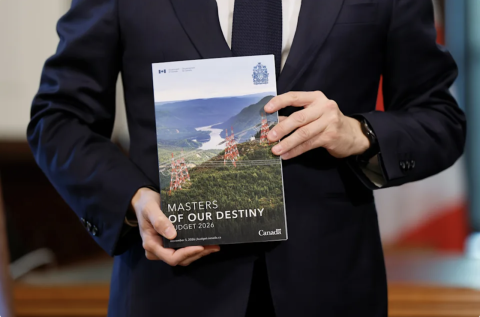
On November 5, 2026, Finance Minister François‑Philippe Champagne tabled Budget 2026: Masters of our destiny. The budget includes significant new investments in housing, infrastructure, homelessness prevention, community safety, and clean energy, while emphasizing economic growth and long-term competitiveness.
The fiscal plan projects a $62.3 billion deficit in 2026-27, with annual deficits remaining above $50 billion throughout the five-year forecast. While federal debt is expected to continue increasing, the government's fiscal strategy focuses on stabilizing the federal debt burden at approximately 40% of GDP, rather than returning to a balanced budget in the near term.
Key highlights of interest to BC local governments are outlined here.
Housing and Infrastructure
- Non-Market Housing: $13 billion over 10 years beginning in 2028-29 to expand the capital capacity of Build Canada Homes and accelerate the development of non-market housing across Canada.
- Municipal Permitting Modernization: $100 million over three years beginning in 2027-28 through a partnership with the Federation of Canadian Municipalities to support e-permitting systems and the use of artificial intelligence in development approvals.
- Community Recreation Infrastructure: $1.5 billion over nine years through the Build Communities Strong Fund to support the construction, expansion, retrofit and rehabilitation of recreation facilities and community ice rinks, with $750 million dedicated to each stream.
- Federal Lands Infrastructure: $2 billion to prepare federal lands for housing development by funding enabling infrastructure such as water, wastewater, transportation and roads.
Homelessness and Supportive Housing
Budget 2026 commits $11.2 billion over four years as the first phase of a 10-year, nearly $30 billion action plan aimed at reducing and preventing homelessness through housing, health care and social supports.
- Integrated Supports Fund: $5 billion beginning in 2027-28 through Build Canada Homes to support projects that integrate housing with mental health, addictions, health care and social services.
- Supportive and Transitional Housing: $10 billion beginning in 2027-28 to build supportive and transitional housing across Canada. Provincial and territorial partners will be expected to fund ongoing operations and wraparound services.
- Health Infrastructure Fund: $2 billion over two years beginning in 2027-28 to expand health infrastructure capacity.
- Reaching Home and Veterans Homelessness Program: $6.5 billion over 10 years beginning in 2028-29 to continue community-based homelessness prevention and support services, including dedicated supports for veterans.
- Canada Housing Benefit: $5.6 billion over 10 years to renew direct rental assistance for low-income Canadians and help prevent homelessness.
Emergency Management
The budget includes measures to strengthen Canada's emergency preparedness and disaster response capacity:
- Wildfire Suppression Capacity: $2.5 billion in financing to De Havilland Canada to expand waterbomber production capacity.
- Earthquake Insurance: A commitment to establish the Canadian Earthquake Insurance Facility, providing up to $50 billion in emergency funding support to the insurance sector following a major earthquake, and improving insurers' ability to pay claims.
Community Safety
Key community safety investments include:
- Repeat Violent Offenders: $30.9 million over three years to continue Intensive Rehabilitative Custody and Supervision services for youth with serious and repeat offending histories.
- Digital Safety and Privacy: $176.3 million over five years, plus ongoing funding, to establish a new Digital Safety and Data Protection Commission of Canada to enforce the Safe Social Media Act and the Protecting Privacy and Consumer Data Act.
- Countering Violent Extremism: $64 million over four years, plus ongoing funding, to support the Canada Centre for Community Engagement and Prevention of Violence and expand the Community Resilience Fund.
Environment and Climate Action
The budget includes several commitments to environmental protection and clean energy development:
- Marine Ecosystem Protection: As part of a $1.2 billion oceans package, funding includes $136 million for marine ecosystem and species protection and $186 million for Indigenous-led conservation and stewardship initiatives in the Great Bear Sea and B.C.'s North Coast.
- Aquatic Invasive Species: $38 million over four years to strengthen prevention, monitoring, and response efforts.
- Clean Electricity Infrastructure: $4 billion over 10 years to support grid modernization, renewable energy development, and priority electricity projects.
- Zero-Emission Vehicle Charging: $587 million over five years to renew the Zero-Emission Vehicle Infrastructure Program, supporting the installation of more than 55,000 additional EV chargers across Canada.